


Ghee is in every Indian kitchen. But these days you see a new name everywhere, A2 Gir Cow Ghee. It costs more than regular ghee. So people ask, is it really better? Or is it just a fancy name?
The truth is, there are real differences between A2 Gir Cow Ghee and regular ghee. The cow, the milk, and the making method are all different. And these differences matter for taste, quality and health.
At Nutriorg, we make pure A2 Gir Cow Ghee using the traditional bilona method. In this blog, we explain 6 real differences, the benefits, and how to spot pure ghee so you do not get cheated.

A2 Gir Cow Ghee is ghee made from the milk of Gir cows. Gir is a famous Indian desi cow breed from Gujarat. These cows give a special type of milk that contains A2 protein.
Most regular ghee comes from crossbred or foreign cows and buffaloes. Their milk usually has A1 protein. A2 Gir Cow Ghee comes from pure desi Gir cows whose milk has only A2 protein, which many believe is easier to digest.

The bilona method is the old, traditional way of making ghee. It is slow and takes more effort, but it gives the purest ghee.
In the bilona method, curd is made from the milk first. Then the curd is churned to get butter. Then the butter is slowly heated to make ghee. This is very different from the modern way, where ghee is made directly from cream by machines.
A2 Gir Cow Ghee made with the bilona method keeps more nutrients, better aroma and a richer taste. This is why bilona ghee is considered the gold standard.

| Point | A2 Gir Cow Ghee | Regular Ghee |
|---|---|---|
| Source | Pure desi Gir cows | Crossbred cows or buffalo |
| Protein type | A2 protein (easier to digest) | Often A1 protein |
| Making method | Traditional bilona (curd to butter to ghee) | Modern cream method by machine |
| Nutrients | Higher, method keeps goodness | Lower, mass produced |
| Taste & aroma | Rich, natural, grainy texture | Milder, often flat |
| Price | Higher (more effort, pure source) | Lower (mass produced) |
So yes, A2 Gir Cow Ghee costs more. But you are paying for a pure desi cow source, A2 protein and the slow bilona method. For many families, this is worth it.

Here are the main a2 gir cow ghee benefits that people value.

The A2 protein in Gir cow milk is believed to be gentler on the stomach. Many people who feel heavy after regular ghee find A2 ghee easier to digest.

Ghee is a good source of healthy fats. A2 Gir Cow Ghee made the bilona way keeps these fats in a natural form that may support energy and overall strength.
A2 ghee has Vitamin A, D, E and K, plus healthy fatty acids. These may support immunity, skin health and overall wellness when eaten in the right amount.
A small amount of A2 Gir Cow Ghee in dal, roti or khichdi adds taste and nutrition. It is a traditional food used across all ages in India.
Remember, ghee is healthy in the right amount. Do not eat too much. One to two teaspoons a day is enough for most people. If you have any health condition, ask your doctor.

Many brands sell normal ghee with an A2 label. Here is how to check if you are getting real A2 Gir Cow Ghee.
| Signs of Pure A2 Ghee | Signs of Fake or Low Quality |
|---|---|
| Made from desi Gir cow milk | Made from buffalo or crossbred cow milk |
| Made by the bilona method | Made by the fast cream and machine method |
| Grainy texture, rich aroma | Very smooth, flat smell |
| Melts quickly and evenly | Leaves an oily, sticky feel |
| Clear source and honest label | No clear source, only marketing words |
| Slightly higher price | Very cheap price for A2 label |
A simple home test, real ghee melts fast on your warm palm and has a natural grainy texture when set. Very cheap A2 ghee is usually not real A2 Gir Cow Ghee.
For real benefits, choose A2 Gir Cow Ghee that is made from pure desi Gir cows using the traditional bilona method. Check the source and making method, not just the label.
Nutriorg A2 Gir Cow Ghee is made from the milk of desi Gir cows using the slow bilona method. It has the rich aroma, grainy texture and A2 protein of pure desi ghee. No shortcuts. No mixing. Just pure, traditional ghee for your family.
Pure, traditional bilona ghee — made from desi Gir cows. No shortcuts, no mixing.
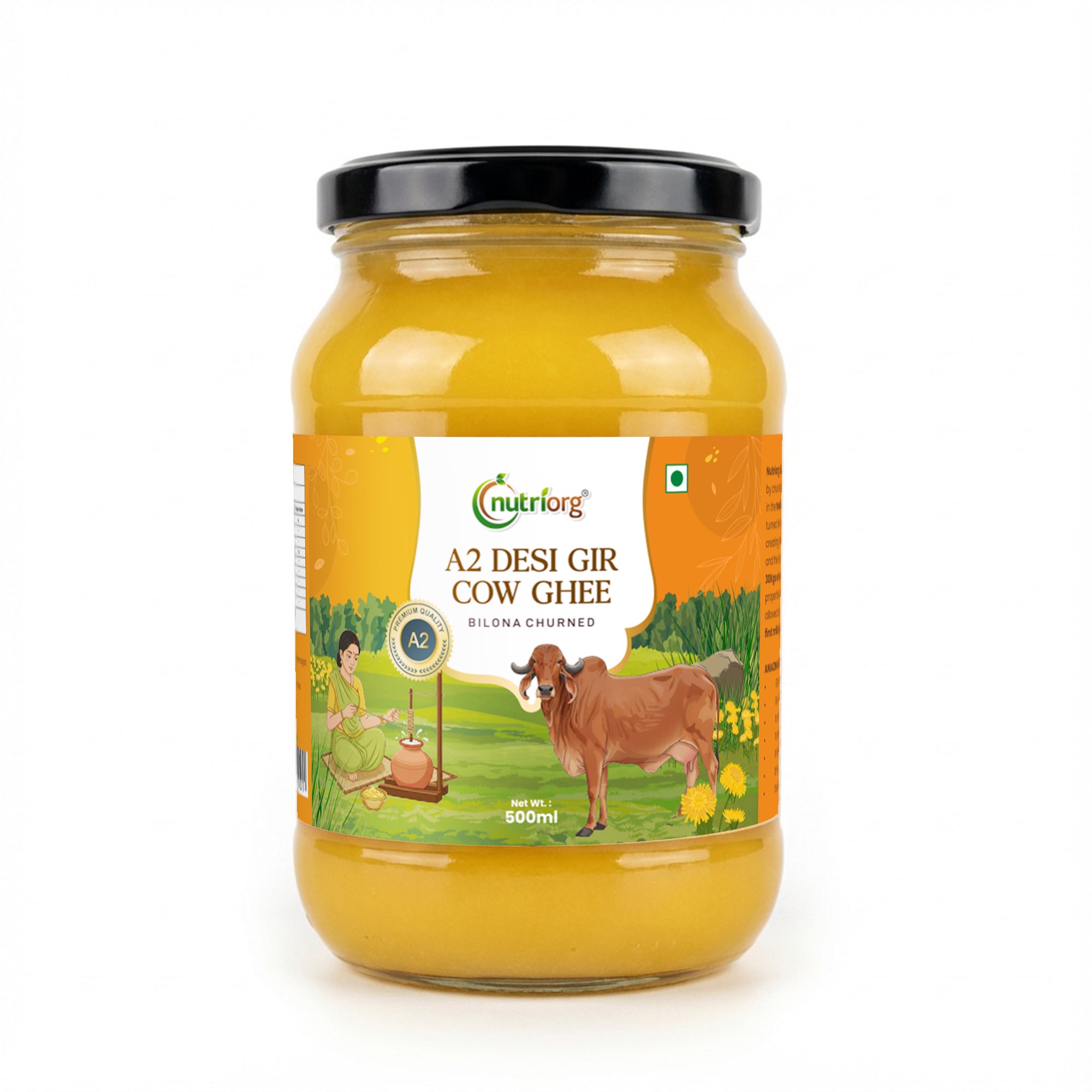
Made from desi Gir cow milk using the traditional bilona method. Rich aroma, grainy texture.
Shop NowTwo jars of pure bilona A2 ghee. Best value for your family's daily needs.
Shop Pack of 2A2 Gir Cow Ghee is not just a fancy name. The pure desi Gir cow source, the A2 protein and the slow bilona method make it different from regular ghee. It may be easier to digest and richer in taste and nutrition. Yes, it costs more, but for many families the quality is worth it. Just make sure you buy real A2 Gir Cow Ghee, made the bilona way, from a source you trust.


