Apple cider vinegar may give a small, helpful nudge to blood sugar control in people with type 2 diabetes, when taken diluted in water before meals or at bedtime. Studies show modest improvements, not dramatic ones. It is not a cure, it cannot replace your medicine, and some people should avoid it. Always ask your doctor first.
You have probably seen the reels. A spoon of apple cider vinegar before food, and your sugar spike disappears. Some of that is true, and a lot of it is exaggerated.
This guide tells you what the research says in simple words, how much to take, when to take it, who should stay away, and the mistakes that can turn a healthy habit into a problem.
| Question | Simple Answer |
|---|---|
| Does it help? | It may help a little with fasting sugar and after-meal spikes in type 2 diabetes. |
| How much? | Start with 1 teaspoon (5 ml). Most studies used 1 to 2 tablespoons (15 to 30 ml) a day. |
| How to take? | Always mixed in a full glass of water. Never neat. |
| When? | 15 to 20 minutes before a carb-heavy meal, or at bedtime. |
| Who should avoid it? | People with gastroparesis, low potassium, ulcers, or frequent low sugar episodes. |
| Can it replace medicine? | No. Never stop or reduce your medicine on your own. |

Apple cider vinegar has been studied for blood sugar for over 20 years. Here is a simple summary of the most useful research.
A small study from Arizona State University found that 2 tablespoons of apple cider vinegar with a small snack at bedtime lowered waking blood sugar in people with type 2 diabetes. The effect was about 4 to 6 percent, and it was strongest in people whose morning sugar was above 130 mg/dL.
Several studies found that vinegar taken before a high-carb meal can reduce the sugar rise after that meal. Researchers think the acetic acid in vinegar slows how fast the stomach empties and helps muscles take up sugar.
A 2025 review that combined seven controlled trials in people with type 2 diabetes found that apple cider vinegar was linked with lower fasting blood sugar and lower HbA1c. The effect looked stronger at doses above 10 ml a day. The researchers also noted that the studies were small and results varied.
So the honest picture is this. Apple cider vinegar for diabetes may offer a small benefit as part of your routine. It is not strong enough to replace medicine, diet or exercise.
These effects are small. Think of apple cider vinegar as a helper for your plate, not a tool to fix high sugar on its own.

| Stage | Amount | How |
|---|---|---|
| Week 1 | 1 teaspoon (5 ml) once a day | In a full glass of water, before your biggest meal |
| Week 2 onward | 1 tablespoon (15 ml) once a day | Same way, if your stomach is fine |
| Only if doctor agrees | Up to 2 tablespoons (30 ml) a day | Split into two doses, never more |
Mix 1 tablespoon of apple cider vinegar in a glass of water with a pinch of jeera powder and a little black salt. Sip it before lunch or dinner.
Toss cucumber, onion and tomato with 1 teaspoon of apple cider vinegar, salt and pepper. Eating this salad first, before rice or roti, adds fibre and vinegar together.
Add a few drops to mint chutney or onion raita instead of lemon. It gives a tangy taste with the same benefit.
Skip honey in your apple cider vinegar drink. Honey is sugar, and many reels add it without telling you.

This is the most dangerous mistake. Even if your readings look better, only your doctor can change your medicine. Apple cider vinegar is a support, not a treatment.
Undiluted vinegar can burn the throat and damage tooth enamel. Always mix it in a full glass of water.
More vinegar does not mean lower sugar. High doses can cause stomach pain, nausea and low potassium. Stay at 1 to 2 tablespoons a day at most.
Many apple cider vinegar gummies and ready drinks have added sugar. For a sugar patient, this defeats the purpose. Use plain, unsweetened apple cider vinegar.
If you take insulin or certain tablets, adding vinegar may push sugar lower than usual. Check more often in the first weeks and share the readings with your doctor.

| If You Have This | Why to Be Careful |
|---|---|
| Diabetic gastroparesis (slow stomach) | Vinegar may slow stomach emptying further and make sugar harder to control |
| Low potassium, or on diuretics or digoxin | Large amounts of vinegar may lower potassium |
| On insulin or sulfonylurea tablets | Sugar may drop too low. Doctor must guide the dose |
| Acidity, reflux or ulcers | Vinegar is acidic and may worsen symptoms |
| Kidney disease | Ask your doctor before any regular acidic drink |
| Pregnancy | Ask your doctor first |
If you feel shaky, sweaty, dizzy or confused after starting, check your sugar right away. If it is low, take something sweet and check again after 15 minutes. Then call your doctor.
Some of the early vinegar studies were done in people with insulin resistance, which is common in prediabetes. Vinegar before a carb-heavy meal helped their after-meal sugar more than it helped people with type 2 diabetes. If your doctor has told you your sugar is borderline, a diluted spoon before meals, along with walking and less refined carbs, is a reasonable habit to discuss.
People with type 1 diabetes depend fully on insulin. Vinegar may change how fast food is absorbed, which can make insulin timing harder. In people with type 1 diabetes who also have slow stomach emptying, a small study found vinegar slowed the stomach further. Do not try it without your diabetes doctor's guidance.
Many Indian homes already use methi or lemon water for sugar. Here is how they compare.
| Point | Apple Cider Vinegar | Methi Water | Lemon Water |
|---|---|---|---|
| Main active part | Acetic acid | Soluble fibre | Citric acid, Vitamin C |
| Research for sugar | Several small trials and reviews | Several small trials | Very limited |
| Best time | Before meals or bedtime | Morning, empty stomach | Any time |
| Main caution | Acidic, dilute well | May cause gas | Acidic for teeth |
You do not need all three. Pick one habit your stomach suits and your doctor approves, and stay regular.

Choose plain apple cider vinegar with no added sugar. Raw, unfiltered vinegar with the cloudy mother is the type most people prefer. The acetic acid content matters more than fancy claims.
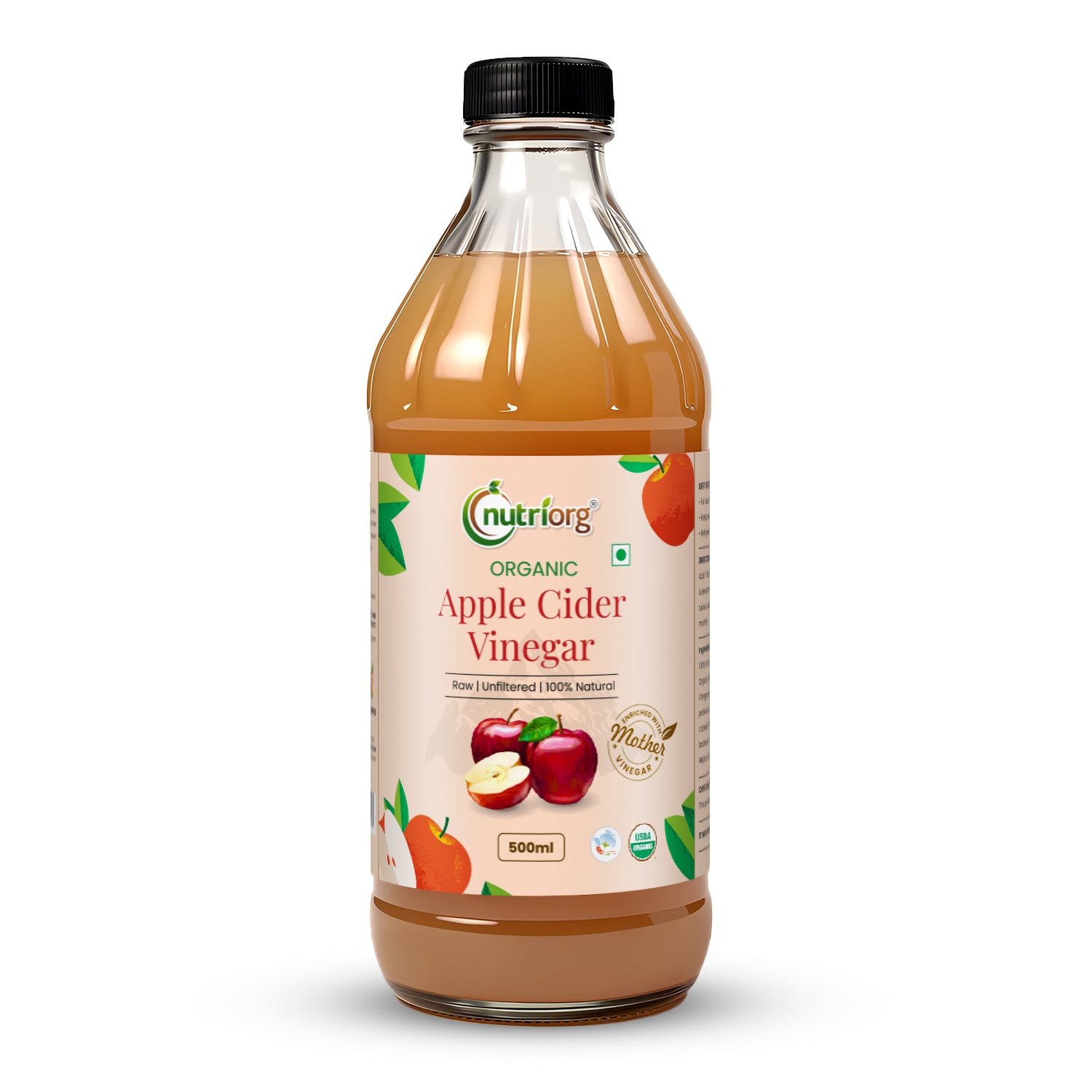
Nutriorg Certified Organic Apple Cider Vinegar is raw and unfiltered, with the mother, and no added sugar. If you also want an Ayurvedic herbal support, Nutriorg Diabetic Care Juice combines 18 herbs including karela and jamun. Both are supports, not cures, and should be used with your doctor's advice.
Raw, unfiltered, with the mother — no added sugar. The clean choice for sugar patients.
Apple cider vinegar is a simple kitchen habit that may give your blood sugar a small helping hand. Dilute it, measure it, take it before meals, and watch your readings. Above all, keep taking your medicine and stay in touch with your doctor. Used this way, apple cider vinegar can be a safe, small part of your diabetes routine.